How to Trade Meme Coins Without Losing Your Capital to Emotions and Exit Liquidity
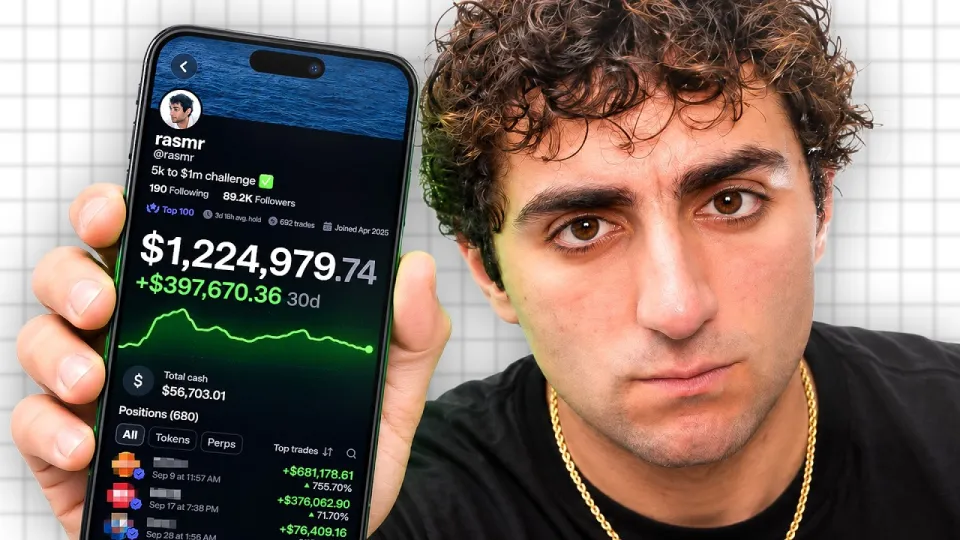
Video: 5 Years of Memecoin Knowledge in 12 Minutes
You can order the same kind of articles for your own video to boost it on YouTube and Google. Just message the Telegram bot @sat_sit_bot. The bot writes and publishes the articles itself (with your YouTube video embedded) on popular topical websites (no ads). Free trial — 50 articles.
· based on the channel rasmr
A meme coin is a token whose value rests almost entirely on attention, narrative and liquidity rather than on revenue or cash flow, so trading it is a risk-management exercise first and a conviction exercise second. The workable approach is to define the narrative, the market cap at which early holders usually sell, and your own staged exit plan before you buy a single token, and then execute that plan without letting a green candle rewrite it. Platforms such as FOMO let you trade these launches on-chain, but the tool never replaces the plan.
The framework below follows the ground covered by the rasmr breakdown "5 Years of Memecoin Knowledge in 12 Minutes", expanded into something you can actually apply on a chart.
What actually drives a meme coin price
A meme coin has no earnings, so its price is a function of narrative strength, available liquidity and the behaviour of whoever holds the supply. Three inputs matter more than any technical indicator:
- Narrative — what story the token sells and how quickly that story spreads. A token tied to a live cultural moment moves differently from one recycling an old meme.
- Who released it — the deployer's track record and whether the supply sits in a handful of wallets. A launch announced to a private group before the public sees it is a distribution setup, not an opportunity.
- Liquidity depth — how much capital it takes to move the price 20% in either direction. Thin liquidity cuts both ways: fast upside, faster downside.
If you cannot answer those three questions in two sentences each, you do not have a thesis, you have a lottery ticket.
How to size a position so a rug is survivable
Position sizing is the only risk control that works before the trade, and it is the one most traders skip. Because a meaningful share of meme coins go to near zero, treat every entry as capital you can lose in full.
- Cap any single meme coin position at a small fixed percentage of your portfolio — a level where a total loss changes nothing about your month.
- Never add to a losing position hoping the chart recovers; that converts a small planned loss into an unplanned large one.
- Keep the rest of the portfolio in assets you are not checking every fifteen minutes, so one bad launch cannot force you to sell something else at a bad price.
- Write the maximum loss down before entry. If the number feels uncomfortable, the position is too big.
How to plan exits by market cap, not by feeling
Exits are where meme coin traders actually make or lose money, and market cap is the cleanest reference point. Retail distribution tends to cluster around round, familiar caps, because that is where early buyers decide they have made enough.
A workable exit structure looks like this:
- Before buying, note the current market cap and the cap you think the narrative can reach.
- Sell a portion — for example a third — at a first target that returns your initial capital.
- Sell another portion at the next round cap level, and trail the remainder.
- Accept that you will never sell the exact top, and stop trying.
The failure mode described most often by traders is round-tripping: watching an unrealized gain of 50–100% turn into zero because the chart looked like it would keep going. A staged exit converts a paper gain into a real one, and it removes the decision from the moment when you are least rational.
Why emotions cost more than bad picks
Emotional execution destroys accounts faster than bad token selection, because it turns one mistake into a sequence. The recurring patterns are consistent:
- Revenge holding — refusing to take a loss because the chart "has to bounce", which is how a 20% drawdown becomes a 90% one.
- Greed on the way up — seeing a position double and adding at the top instead of trimming, right as early holders are selling into your bid.
- FOMO entries — buying a vertical candle because the token is trending, which means paying the price the informed seller wanted.
- Overtrading — forcing a trade every day in a market where most launches deserve to be skipped.
The practical fix is mechanical: written entry criteria, written exit levels, and a rule that no position is adjusted while you are watching it in real time. If a decision cannot survive being made an hour later, it was not a decision.
Common questions traders ask before their first launch
Most beginner questions are really questions about distribution. Traders want to know how to spot a rug before it happens, whether a private group's early call is a genuine edge, and whether a token tied to a big upcoming release is a good buy.
On rugs: there is no perfect detector, but concentrated supply, unlocked dev wallets, thin liquidity and a deployer with no history are the standard red flags, and any one of them is enough to pass. On private groups: being early is an advantage for the people already inside, and by the time a call reaches you the easy part of the move is usually priced in. On hype tokens tied to games or events: the narrative can be real and the token still be a bad trade if the launch valuation already assumes the entire audience shows up.
A useful habit is to keep a written log of every entry with the reason, the cap and the exit plan, then review it weekly. Patterns in your own behaviour show up faster than patterns in the market.
Useful links
- FOMO trading platform — the platform referenced in the video for trading launches.
- Catalyst trading group on Discord — the community chat linked in the description.
The bottom line
Meme coin trading rewards process over prediction: define the narrative, size the position so a total loss is survivable, and sell in stages at market cap levels you chose before entry. The traders who last are not the ones who pick better tokens, they are the ones who never let a single launch decide their month. The rasmr channel condensed five years of this experience into a twelve-minute breakdown, and the value is in applying the checklist rather than memorising the stories. If you want to put the framework to work, start with a small position through FOMO and log every trade from day one.
Key takeaways
- Meme coins are narrative-driven tokens with no cash flow; price depends on attention, liquidity and who launched the token.
- The most common loss pattern is round-tripping: sitting on 50–100% unrealized profit and giving it back instead of selling in stages.
- Market cap, not entry price, is the main exit reference — most retail distribution clusters at familiar cap levels.
- Emotional trading (averaging into a loss, top-blasting a green candle) is cited by traders as the single biggest account killer.
- Early access to a launch is usually a distribution advantage for insiders, not a signal of quality for outside buyers.
Questions & answers
How much of my portfolio should go into a single meme coin?
Only an amount you can lose entirely without changing your financial situation — typically a small fixed percentage per position. Because a meaningful share of these tokens go to near zero, sizing is the primary risk control and should be set before entry, not adjusted afterwards.
When should I take profit on a meme coin?
Plan exits by market cap rather than by feeling: sell a portion at a first target that returns your initial capital, another at the next round cap level, and trail the rest. This prevents round-tripping a 50–100% paper gain back to zero.
How do I spot a rug pull before buying?
Look for concentrated supply in a few wallets, unlocked dev allocations, thin liquidity and a deployer with no track record. Any single red flag is usually enough reason to skip the launch entirely.
Is being in a private group an advantage?
It is an advantage for the people already inside, because they buy before the public call and sell into the demand it creates. For an outside buyer, an early call is a distribution signal rather than proof the token is good.
Source: 5 Years of Memecoin Knowledge in 12 Minutes · Markdown version